
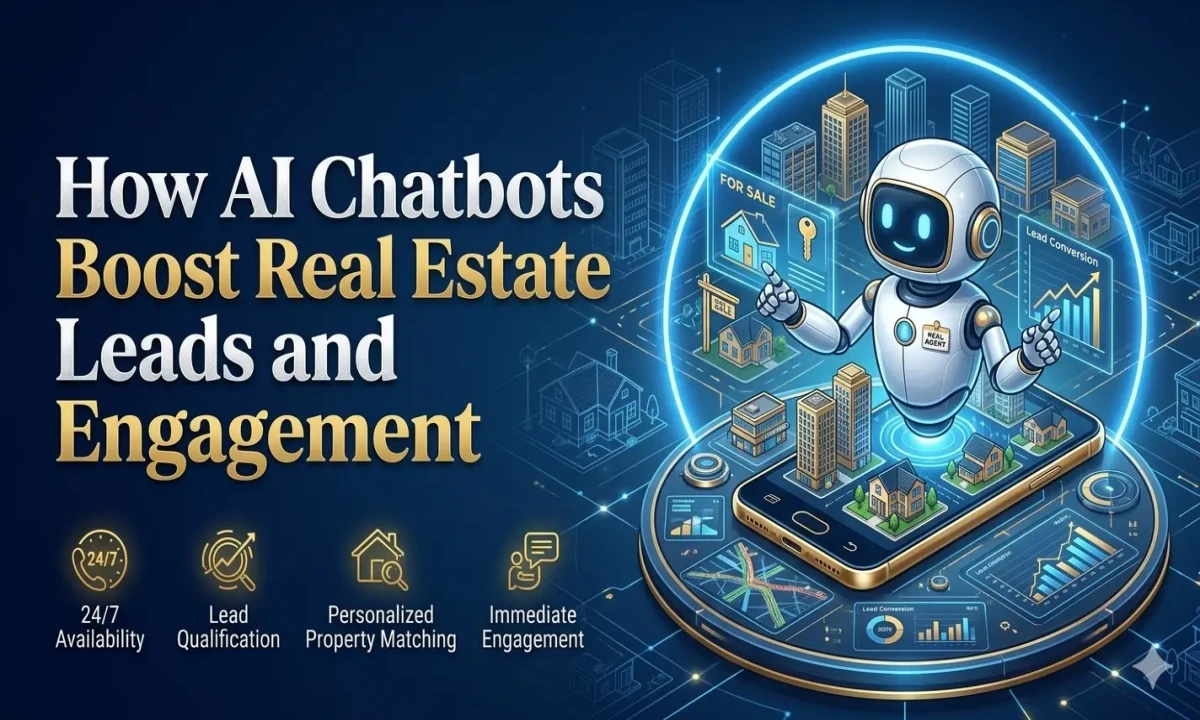
Real estate has never been short on demand. What’s changed is how people explore it. A few years ago, buyers would call agents, schedule visits, and rely heavily on in-person conversations. Today, most of that journey happens silently — users browse listings, compare options, and leave without ever making direct contact.
That shift has created a new challenge for the industry: capturing attention at the right moment.
In fact, a growing share of property searches now begin and end online, with users expecting instant responses, personalized recommendations, and seamless communication. Delayed replies and static inquiry forms are no longer enough to convert modern buyers.
As a result, many businesses now work with a mobile app development company to combine chatbots and digital experiences that improve lead generation and engagement.
That’s exactly why agencies, brokers, and property platforms are focusing on AI-driven solutions that not only generate leads—but convert them consistently.
Real estate hasn’t slowed down — but the way buyers make decisions has changed completely.
Today’s property buyers prefer to explore quietly. They compare listings, evaluate options, and often leave without ever filling out a form or contacting an agent. This shift hasn’t reduced demand — it has made engagement timing the real challenge.
That’s where AI chatbots in real estate lead generation are making a real difference.
Instead of waiting for users to act, chatbots initiate conversations instantly. They engage visitors when interest is at its peak and guide them before they drop off. This transforms how modern real estate lead generation works.
The traditional approach still depends heavily on delayed actions — forms, callbacks, and manual follow-ups.
Users today expect immediate responses. When that expectation isn’t met, they move on quickly, often choosing competitors who respond faster.
Key Limitations of Traditional Systems
This gap between intent and response is exactly what modern systems need to solve.
AI chatbots replace passive systems with interactive engagement. Instead of waiting for inquiries, they actively guide users through a structured conversation.
They identify intent early, qualify leads automatically, and ensure that every interaction contributes to conversion.
This is why AI in real estate is becoming a core part of scalable lead generation strategies.
A real estate chatbot is more than a messaging tool — it’s a system designed to manage conversations, understand user intent, and convert interactions into qualified leads.
When a visitor lands on a website, the chatbot starts a contextual conversation. Instead of overwhelming the user, it asks simple questions and adapts based on responses.
This interaction is powered by AI, making it feel natural rather than scripted.
Rather than collecting basic inquiries, chatbots gather structured information during conversations.
By the end of the interaction, the system has already filtered the lead, making it more valuable for sales teams.
Chatbots connect directly with CRM platforms and real estate automation software, ensuring that all data is stored and accessible.
This integration allows businesses to automate workflows and maintain consistency across their lead generation software for real estate.
AI chatbots don’t just capture leads — they influence how users behave during their journey.
Most users browse without taking action. Chatbots change that by introducing immediate interaction, encouraging users to engage naturally.
Instead of filtering leads later, chatbots qualify them during the conversation itself. This ensures that only relevant prospects move forward.
Modern users expect tailored experiences. Chatbots analyze user inputs and provide relevant property suggestions instantly.
One of the biggest challenges in real estate lead generation is maintaining consistent follow-up.
Chatbots solve this by ensuring continuous communication even after the initial interaction.
| Aspect | AI Chatbots (Modern Approach) | Traditional Lead Generation (Forms/Calls) |
| Response Speed | Instant, 24/7 availability — no waiting time | Delayed responses, often hours or even days |
| Lead Qualification | Happens in real-time during conversation, with context | Done manually after inquiry, often inconsistent |
| Scalability | Can handle unlimited conversations at once without extra cost | Limited by team size and working hours |
| Cost Efficiency | Predictable, lower operational cost (automation-driven) | High ongoing costs (staff, calls, follow-ups) |
| User Engagement | Interactive, personalized, and conversational experience | Static forms and one-way communication |
| Lead Quality | Pre-qualified leads with clear intent and preferences | Mixed-quality leads with incomplete information |
| Follow-Up Process | Automated, timely, and consistent across all leads | Manual follow-ups, often delayed or missed |
| Availability | Always active — even during nights, weekends, holidays | Restricted to business hours |
| User Experience | Smooth, guided journey that reduces effort | Friction-heavy process requiring multiple steps |
| Conversion Potential | Higher due to instant engagement and personalization | Lower due to delays and lack of interaction |
Real estate isn’t just about properties anymore — it’s about how quickly and smoothly you respond to people. Buyers today don’t like waiting, and even a small delay can make them move on.
That’s where AI chatbots in real estate lead generation make a real difference. They help you stay available, responsive, and consistent without putting extra pressure on your team. Many businesses are now also investing in AI app development solutions to combine chatbots, automation, and smarter customer engagement in one system.
When someone shows interest in a property, they usually check multiple options at once. If they don’t hear back quickly, they simply move on.
A real estate chatbot replies instantly, keeping the conversation alive right when the buyer is most interested.
Getting a lot of inquiries sounds good, but not all of them turn into real buyers.
Chatbots ask simple questions early on, helping identify serious buyers from casual browsers. This improves real estate lead generation and helps your team focus on the right prospects.
In real estate, people rarely decide immediately. They need time, reminders, and sometimes a little push.
Chatbots handle follow-ups automatically, so no lead is forgotten and every potential buyer stays connected.
People don’t like generic replies. They want options that actually match what they’re looking for.
Chatbots use the information shared by users to suggest relevant properties, making the experience feel more natural and helpful.
Buyers don’t follow office timings. Many of them search for properties late at night or during weekends.
Chatbots stay active all the time, making sure you never miss an opportunity just because your team isn’t online.
As your business grows, handling more inquiries becomes difficult. Hiring more people increases costs.
Chatbots handle multiple conversations at once, helping you grow without worrying about managing a bigger team.
Real estate has always been about timing, communication, and trust. The difference today is that clients expect all three—instantly. That’s exactly where chatbots step in. They don’t just answer questions; they help you connect with potential buyers at the right moment, guide them through their journey, and make your entire process feel smoother and more responsive.
When someone shows interest in a property, even a small delay can cost you that lead. Chatbots make sure that never happens by responding instantly and starting meaningful conversations right away.
If you’re wondering how AI chatbots generate real estate leads, this is where it starts.
Opportunities in real estate chatbot usage include:
Nobody enjoys scrolling through endless listings that don’t match their needs. Chatbots make this easier by understanding what users are looking for and showing them options that actually fit.
This is one reason many agencies invest in AI chatbot development for real estate to improve customer experience.
Key advantages include:
Coordinating property visits and following up with leads can take up a lot of time. Chatbots simplify this by handling these tasks automatically and efficiently.
What this enables:
Today’s customers move between platforms quickly, and they expect a consistent experience everywhere. Chatbots help you stay connected with them no matter where they reach out. Combined with modern lead generation software for real estate and software development services, businesses can create a stronger and more connected engagement system..
This leads to:
In real estate, trust is everything. When users get quick and clear answers, they feel more confident about moving forward. Chatbots help build that trust from the very first interaction.
Benefits include:
Every conversation tells you something valuable about your customers. Chatbots quietly collect this information and turn it into insights you can actually use.
What you gain:
Building AI-powered chatbots for your real estate business doesn’t have to feel overwhelming or time-consuming. The truth is, speed comes from clarity—not complexity. When you know exactly what you want to achieve and avoid overbuilding in the beginning, you can launch faster and start seeing results much sooner.
Everything becomes easier when you’re clear about why you’re building the chatbot. Is it for real estate lead generation, answering buyer queries, or booking property visits?
If you try to do everything at once, the process slows down. But when you focus on one clear goal, you can move faster and build something that actually works from day one.
Start small, solve one problem well, and then grow from there.
The way you build AI-powered chatbots plays a big role in how quickly you can launch. Going fully custom might sound appealing, but it often takes more time and effort than expected.
That’s why many businesses start with ready-made tools or a real estate chatbot platform that already offers the basics. You can always customize later once you understand what users actually need.
A balanced approach helps you save time without sacrificing quality.
A chatbot should feel like it understands your business, not like it’s giving generic replies. The best way to do that is by training it with real information—your property listings, customer questions, and past conversations.
This is where AI in real estate becomes practical, helping interactions feel more natural and helpful for users.
Sometimes, trying to make things “too advanced” actually slows everything down. A simple, easy-to-use chatbot is far more effective than a complicated one.
Users should be able to ask questions, explore properties, or book a visit without confusion. When the experience feels smooth, people are more likely to stay engaged and take action.
Your chatbot shouldn’t work in isolation. To make it truly useful, it needs to connect with your existing systems like CRM, property databases, or scheduling tools.
Many businesses combine chatbots with real estate automation software to streamline lead handling and reduce manual work.
It’s a small step that makes a big difference in efficiency.
Waiting for perfection often leads to unnecessary delays. A better approach is to launch a working version, see how people use it, and then make improvements along the way.
This is often the fastest way to build AI-powered chatbots that improve over time instead of trying to get everything perfect before launch.
Real user feedback helps you understand what’s working and what needs adjustment. Over time, your chatbot becomes smarter and more effective without slowing down your initial launch.
Finding quality leads in real estate isn’t just about getting more inquiries—it’s about getting the right ones and responding at the right time. Today, buyers expect quick replies, personalized suggestions, and smooth communication. That’s why smart tools and AI chatbots in real estate lead generation have become essential. They don’t just save time—they help you stay consistent, organized, and one step ahead of your competition.
Good lead generation tools act like your digital assistant. They collect leads from different sources, organize them, and help you follow up without missing anyone.
Some of the best real estate lead generation tools include:
Chatbots are like having a team member who never sleeps. They handle conversations, answer questions, and even qualify leads while you focus on closing deals.
Some options considered among the best chatbot for real estate agents include:
These tools often work well alongside a real estate chatbot strategy to improve response times and lead handling.
The biggest advantage of using these tools is speed and consistency. Instead of manually replying to every message or tracking leads in spreadsheets, much of the process can run automatically.
Combined with real estate automation software, they help you respond faster, follow up more effectively, and stay connected with buyers without extra effort.
Over time, this not only improves conversion rates but also highlights the real benefits of AI-powered chatbots in building a more professional and reliable client experience.
When you’re planning to use a chatbot for your real estate business, cost is naturally one of the first things that comes to mind. The truth is, there isn’t a one-size-fits-all price. What you end up paying depends on how advanced you want your real estate chatbot to be, the kind of features you need, how well it integrates with your existing tools, and the level of AI chatbot development for real estate you choose.
In 2026, most real estate chatbot solutions fall somewhere between $5,000 and $80,000+. A simple chatbot that answers basic questions will cost much less than a fully AI-powered assistant that can support real estate lead generation, recommend properties, and automate follow-ups.
Here’s a simple breakdown to give you a clearer idea:
| Chatbot Type | Estimated Cost | Development Time |
| Basic Chatbot (Rule-Based) | $5,000 – $10,000 | 2–4 weeks |
| Standard AI Chatbot | $10,000 – $25,000 | 1–2 months |
| Advanced AI Chatbot (CRM + MLS Integration) | $25,000 – $50,000 | 2–4 months |
| Enterprise-Level Chatbot (Custom AI + Automation) | $50,000 – $80,000+ | 4–6+ months |
If you’re just starting out, a basic chatbot is often enough to handle inquiries and capture leads. But if your goal is to scale using AI in real estate, investing in a more advanced solution can make more sense long term.
A chatbot in real estate isn’t just there to answer questions—it can quietly become one of your best revenue drivers. When used the right way, it works in the background, engaging visitors, qualifying them, and helping create multiple income opportunities.
Instead of forwarding every inquiry to you, a chatbot asks the right questions and filters serious prospects. This improves real estate lead generation while making conversions easier.
You can give certain properties more visibility inside chatbot conversations. Builders or agents are often willing to pay to feature listings where buyers are already engaged.
If you’ve built an effective system, you can build AI-powered chatbots for other agents or agencies and offer them on a subscription model, creating recurring revenue.
A real estate chatbot can handle initial interactions, answer questions, and schedule visits, allowing you to focus on closing more deals instead of managing every inquiry manually.
Every interaction gives insights into buyer intent, preferences, and demand trends. Combined with real estate automation software, these insights can improve both marketing and sales decisions.
During conversations, chatbots can recommend related services like loans, legal support, or interior design. These referral partnerships can become another revenue stream without adding extra workload.
AI-powered chatbots are no longer just a “nice-to-have” in real estate—they’ve become a practical tool for staying competitive. From improving real estate lead generation to guiding buyers through their journey, chatbots help you respond faster, work smarter, and never miss an opportunity.
What really makes a real estate chatbot valuable is how naturally it fits into your daily workflow. It handles repetitive conversations, keeps your pipeline active, and gives you more time to focus on what actually closes deals—building relationships and making the right offers at the right time.
The best part? You don’t need to build everything at once. Start simple, focus on what your business needs today, and improve as you grow. That’s how you turn a chatbot from just another tool into a real growth engine for your business.
Yes, they can make a big difference. Chatbots respond instantly to inquiries, capture leads 24/7, and help qualify potential buyers or sellers. This is one reason AI in real estate is growing so quickly.
The cost can vary depending on features and complexity. A basic real estate chatbot can be affordable, while advanced solutions with automation and integrations require a higher investment. Most businesses start small and scale over time.
No, chatbots are meant to support agents, not replace them. They handle initial conversations and routine questions, while agents focus on negotiations, relationships, and closing deals.
Chatbots engage visitors, ask relevant questions, and collect contact details. This improves real estate lead generation by helping qualify prospects before they reach your sales team.
Important features include lead capture, property recommendations, appointment scheduling, CRM integration, and instant responses. Many businesses also connect chatbots with real estate automation software for added efficiency.
Yes, most modern chatbots can easily integrate with websites, CRM systems, and messaging platforms. This keeps conversations and lead data organized in one place.
Absolutely. They provide quick answers, reduce waiting time, and guide users smoothly through their property search, creating a better experience for potential clients.
Not really. Most platforms are user-friendly. You may need occasional updates or improvements, but day-to-day management is usually simple.
 Jagwinder Singh


Before you leave, let our product consultant help you with a:
Have a project in mind or questions about our product?
Our team is here to help you with








 Discover content from creators around the world and for any interest.